Master the Tomodachi Life MBTI chart with our 2026 guide. Map all 16 personality types to MBTI, optimize Mii creation, and find perfect compatibility.
Jun 28, 2026personality
Read more →Build an island full of Mii characters, watch friendships and romance unfold, customize homes and outfits, and keep up with Tomodachi Life: Living the Dream news, demo, and guides.
Discover the newest guides, tips, and content
Master the tomodachi life concert hall with our 2026 guide. Learn how to unlock all song genres, manage group performances, and customize lyrics.
Master the Tomodachi Life MBTI chart with our 2026 guide. Map all 16 personality types to MBTI, optimize Mii creation, and find perfect compatibility.
Master Tomodachi Quest in Tomodachi Life. Learn about Mii classes, personality groups, battle strategies, and boss rewards in this 8-bit RPG guide.
Master the Palette House with our 2026 Tomodachi Life drawing guide. Learn pixel art techniques, color conversion, and how to unlock custom designs.
Master the Tomodachi Life apartment upgrade system, manage Mii behaviors, and explore how housing evolved in the 2026 release of Living the Dream.
Master Tomodachi Life Mii sharing in 2026. Learn how to use QR codes, import from Miitopia, and find the best community designs for your island.
Discover the best Tomodachi Life designs for Miis, island layouts, and rooms. Learn customization tips and creative setups in this 2026 guide.
Explore the new tomodachi life multiplayer features for Nintendo Switch. Learn how to connect with friends, share Miis, and manage your island in 2026.
Learn how to unlock and raise Tomodachi Life kids. Our guide covers growth stages, babysitting mini-games, and the final decision for grown-up Miis.
Master the Tomodachi Life avatar maker in Living the Dream. Learn how to create cute, expressive Miis with our 2026 step-by-step customization guide.
Master the Tomodachi Life friendship mechanics. Learn how to make Miis become best friends, resolve fights, and build relationships in 2026.
Master Mii customization with our detailed Tomodachi Life eyes tutorial. Learn slider adjustments, aesthetic combinations, and character design tips.
Explore the best tomodachi life mii website resources in 2026. Learn how to find, share, and import high-quality Mii characters using QR codes and digital plazas.
Learn how to replicate and customize the iconic Tomodachi Life text to speech voice. Explore voice parameters, presets, and generation tools.
Explore how to unlock and customize Tomodachi Life apartments, including interior themes, room skins, and furniture acquisition.
Master Tomodachi Life relationship levels, from best friends to marriage, and learn how to influence Mii interactions and family progression.
Investigate and resolve the black grass visual bug in Tomodachi Life, particularly in emulator versions like Eden, with practical solutions and troubleshooting tips.
Learn how to effectively use Tomodachi Life voice settings to give your Miis unique and memorable personalities. Adjust pitch, speed, and tone for perfect character voices.
Discover how to unlock the Ferris Wheel in Tomodachi Life and master the 'Poke the Ferris Wheel' mini-game for maximum fun with your Miis.
Discover how to unlock, customize, and optimize your Mii's rooms in Tomodachi Life: Living the Dream for maximum comfort and style.
Understand Tomodachi Life Mii grammar, group questions, and their impact on personality and relationships. Learn how to influence Mii interactions in 2026.
Découvrez comment les personnalités Mii influencent les relations, les événements et le gameplay dans Tomodachi Life 2: Living the Dream. Maîtrisez le tableau des personnalités pour une île harmonieuse.
Master the Tomodachi Life character maker with our 2026 guide. Learn to create custom Miis, use online tools, and optimize personality settings.
Unlock 60 FPS and optimize graphics in Tomodachi Life: Living the Dream. Follow our guide for the best emulator settings and performance mods in 2026.
Explore all 16 Mii personality types in Tomodachi Life and learn how to customize them for unique island interactions.
Découvrez le nombre maximum de Miis que vous pouvez avoir dans Tomodachi Life, comment les ajouter, et gérer votre population insulaire pour une vie de rêve.
Master Tomodachi Life personality compatibility. Learn how the 16 Mii types, birthdays, and relationship ladders influence island life and romance.
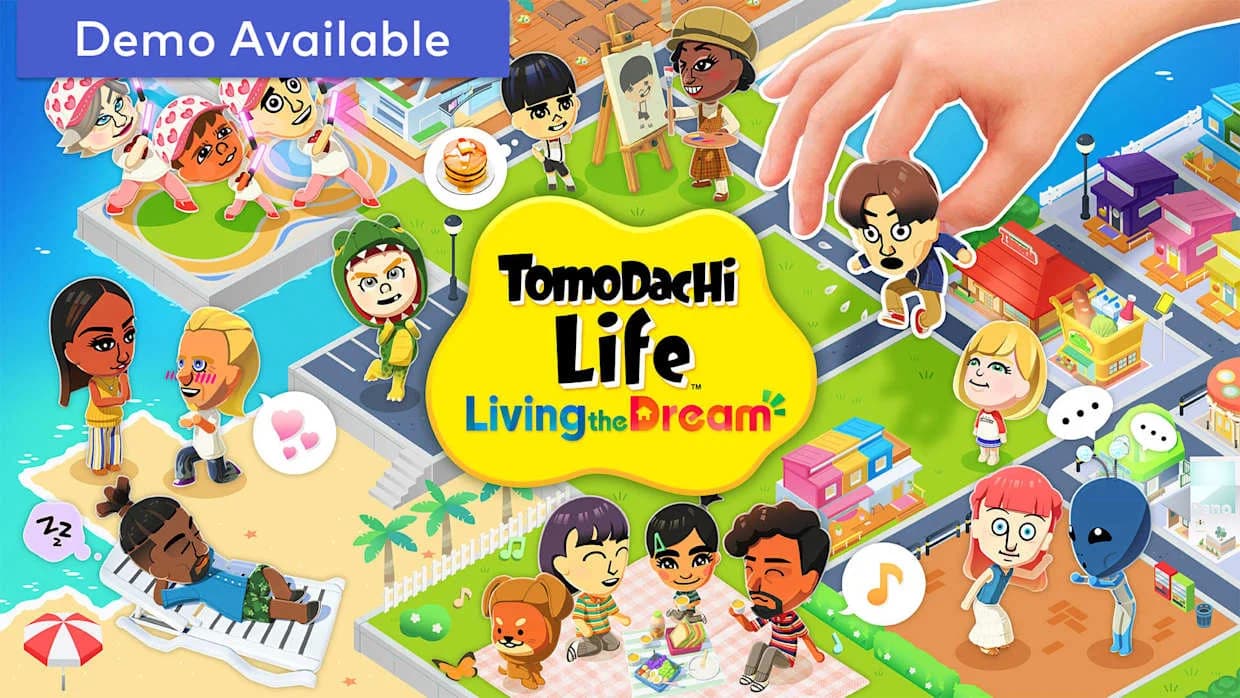
Explore Tomodachi Life: Living the Dream on Nintendo Switch, including release date, demo availability, and key new features for 2026.
Uncover all 16 personality types in Tomodachi Life: Living the Dream and understand how they shape your Miis' interactions and island life.
Navigate the intricate world of marriage and family in Tomodachi Life. Learn about confessions, proposals, weddings, and raising children in this comprehensive guide for Living the Dream.
Everything you need to build your island, understand your Miis, and experience all of Tomodachi Life
Tomodachi Life uses four editable traits during Mii creation to place each resident into one of 16 personalities. Grouped into Easygoing, Outgoing, Independent, and Confident, personalities affect social chemistry, dialogue flavor, and key social outcomes on your island.
The personality chart is built from Movement, Speech, Expressiveness, and Attitude. The Overall row is cosmetic and does not change the final personality result. Tomodachi Life keeps the same 16 personality types used in Tomodachi Collection.
Types: Softie, Optimist, Buddy, Dreamer. Group tone: relaxed, open-minded, empathetic. Softie is emotional and highly empathetic. Optimist stays upbeat. Buddy puts friends first. Dreamer is idealistic and romantic.
Types: Trendsetter, Entertainer, Charmer, Leader. Group tone: social, charming, energetic. Trendsetter is stylish and socially adaptable. Entertainer loves attention. Charmer gets along with almost anyone. Leader is assertive and tends to take charge.
Types: Free Spirit, Artist, Lone Wolf, Thinker. Group tone: self-sufficient, individual, introspective. Free Spirit follows personal values. Artist is quiet and creative. Lone Wolf keeps emotions private. Thinker is reflective and analytical.
Types: Designer, Adventurer, Brainiac, Go-Getter. Group tone: organized, motivated, focused. Designer is polished and goal-oriented. Adventurer seeks new challenges. Brainiac is highly intelligent. Go-Getter pushes ahead with confidence.
QR codes let you add established characters, community creations, and ready-made Miis without rebuilding them by hand. The best QR resources combine large Mii archives with clear import instructions and curated packs you can scan immediately.
MiiWiki's QR code category is an official-created Mii archive with over 1,015 total QR files, including Aerith, Aonuma, Barret, and many more. Best for broad discovery when you want a large back catalog.
Nintendo Life published a ready-to-scan staff pack for Tomodachi Life, generated inside the game itself. Carries over clothing, room décor, catchphrases, personality traits, voice, and original-island information.
Crystal Dreams keeps a long-running Tomodachi Life QR page that works well as a community browse source. Especially useful when you want fan-made picks instead of a strict official archive.
In Mii Maker: open QR Code/Image Options, tap Scan QR Code, align the code, then save the Mii. In Tomodachi Life: go to Town Hall, choose New Mii, then transfer the saved Mii from Mii Maker.
Tomodachi Life feels random at first, but the early game has a readable loop: add residents, solve problem bubbles, unlock facilities, level up Miis, and let relationships snowball into bigger events.
Create your first Miis and keep expanding early. Aim for at least 1 male and 1 female Mii quickly. Many early buildings require a gender mix, so a balanced cast speeds up progress.
Problem bubbles are the main progression engine. At 5 solved problems with 1 male + 1 female Mii, the Clothing Store opens. At 10 problems with 2 male + 2 female, the Hat Store opens.
Shops give you more ways to raise happiness, solve requests, and shape each resident. Save money early so the Interiors Store opens after two Miis save $200 or more.
Every level-up unlocks rewards: songs open the Concert Hall, gifts open the Observation Tower. Each reward deepens your island's sandbox and creates new social events.
At 5 Miis and 15 problems: Rankings Board opens. At 7 Miis with 3+ of each gender: Mii News opens. At 2+2 Miis and 30 problems: Compatibility Tester unlocks.
A love confession unlocks the Park and Café. A wedding unlocks Mii Homes. Keep solving relationship problems to create more chances for confessions, dates, and marriages.
Compatibility in Tomodachi Life is part forecast tool and part relationship planner. It gives you a fast way to see who is likely to mesh well, which pairs qualify for romance checks, and what status ladder a relationship can climb.
Unlocks when you have 2 male Miis, 2 female Miis, and 30 solved problems. This is the first real tool for planning friendships and romance instead of waiting blindly.
Both Miis need full birthdays saved in their profile. Without full birthdays, compatibility cannot be tested. Set them early for residents you care about.
Used for same-gender pairs, family pairs, or different age group opposite-gender pairs. Shows the next week's Work/Study, Chats, and Leisure outlook.
Used for opposite-gender pairs in the same age group. Adds the Love forecast alongside other weekly categories. Best for choosing which pairings to push toward confessions and marriage.
Tomodachi Life runs on hidden social momentum. Every friendship, romance, and family bond sits on a visible status ladder, and those ladders directly affect whether Miis become best friends, start dating, propose, fight, or break up. The fastest way to manage island drama is to learn which statuses matter, which actions raise them, and which mistakes make them collapse.
The game tracks seven main categories: Spouse, Family, Siblings, Sweetheart, Best Friend, Friends, and Ex-Sweethearts/Ex-Spouses. Each category uses its own wording for relationship strength, and stronger bonds sit toward green while weaker bonds sit toward purple.
For Friends, Family, and Siblings in the NA version, the ladder runs from strongest to weakest: Best bud, Good buddy, Great pal, Good pal, Getting along OK, Kinda getting along, Not getting along. If a pair slides into the bottom, fights become more dangerous.
Strong Sweetheart statuses include Let's get married!, Super in love, Totally in love, Very much in love. Strong Spouse statuses include Soul mate, Super happy, Totally happy, Very happy. These are the status words to check before expecting a confession or proposal.
The safest ways to improve bonds are positive relationship advice, dates, and travel tickets. If a Mii asks what you think of a relationship, saying they are great together raises the status. A travel ticket vacation raises the pair by one or two levels automatically.
Arguments, failed reconciliations, and rejected confessions can damage bonds quickly. If a conversation goes badly it can turn into an argument, and if a fight is not resolved the pair can revert to acquaintances. A rejected confession can drop both sides by as many as three levels.
If a sweetheart asks to break up and you tell them to work things out, a successful reconciliation resets a negative dating relationship back to its default level. This recovery rule applies to sweethearts with negative status, not spouses asking for divorce.
Marriage in Tomodachi Life is not a random cutscene you simply wait for. First, a dating pair has to stay stable long enough to trigger a proposal request. Then you must help with a timing-based proposal minigame. Once the proposal succeeds, the couple moves into Mii Homes, unlocks married life, and can eventually ask for a baby.
A marriage request usually appears after the pair has been together for some time and both Miis keep a good relationship with each other.
When one sweetheart gets a love problem and says they want to propose, choose to help instead of putting it off.
Before the minigame starts, you choose where the proposal happens and whether the proposer should change clothes.
During the proposal, tap the heart button only when the partner is thinking about the proposer.
If the couple are kids, they cannot complete the wedding unless you use an Age-o-matic.
A successful proposal leads to the wedding, then a honeymoon, then a move into Mii Homes.
Marriage opens the long-term family layer of the game, but it does not make the relationship permanent.
Babies only appear after a couple is already married and living in Mii Homes. Once that condition is met, the player controls whether births are allowed, whether a specific request is accepted, how the baby is customized, how the child is raised, and whether they stay on the island or leave as a traveler.
Babies can only happen if baby births are enabled in Town Hall and the married couple has a positive relationship.
When a spouse says they have been thinking about having a baby, you can approve or decline.
At birth, the mother asks a short series of questions that decide the baby's first profile settings.
Children grow in visible daily stages and become ready to leave home on day six.
Babysitting changes depending on the child's current stage.
Once the child grows up, the parents immediately call you to decide the next life path.
The child system temporarily changes what the game lets you do with the family.
Food is one of the most repeated systems in Tomodachi Life. It levels Miis, fills hunger, reveals favorite and hated foods, cures certain problems, and supports completion goals through the Town Hall collection list. The smartest way to shop is to understand the Food Mart rotation first, then learn which categories and reaction tiers are worth chasing.
The Food Mart is the first shop unlocked in the game. It opens after the first Mii asks for food, and its stock rotates daily.
Tip: Check it every day early, because new purchases permanently expand your buy-again stock.
Each day the shop offers 5 Daily Specials that are randomly selected from foods you have not bought yet. Once purchased, it is added to the regular In Stock list.
Tip: This is the cleanest way to grow your catalog without waiting for random gifts.
Main dishes: 43 total and fill hunger the most. Side dishes: 83 total and fill less than mains. Desserts: 81 total. Beverages: 24 total and fill the least hunger.
Tip: Use mains when hunger is low, and keep drinks or lighter foods for smaller top-ups.
Super All-Time Favorite launches the Mii into space. All-Time Favorite triggers a dance sequence. Worst causes a major happiness drop. Worst Ever empties the happiness bar completely.
Tip: These four reactions are the key milestones for food collecting and mood control.
A Mii's two strongest favorite-food tiers instantly cheer up a sad Mii and can also be used instead of cold medicine to cure a cold.
Tip: Once you know a Mii's best foods, keep them in reserve for emergencies instead of feeding them casually.
Special foods always trigger a very positive response and award the largest amount of money and happiness. They never appear in a Mii's favorite-food list and can never become All-Time Favorite or Worst Ever.
Tip: Use these when you want guaranteed upside instead of gambling on hidden preferences.
Trash food always costs $0.20 and is guaranteed to be disliked. It cannot be bought from the Food Mart. The Tomodachi Life trash foods are: Ruined meal, Moldy Bread, Banana Peel, and Spoiled Milk.
Tip: Treat these as collection curiosities, not practical food. They are useful only for filling out item lists or chasing reaction data.
In Tomodachi Life, level-up gifts differ from normal consumable gifts. A Mii can own up to 8 level-up gifts at once, and non-Japanese versions include 28 total options. Some gifts create apartment scenes, others drive group activities, outdoor variety, or conflict recovery.
Every level-up can reward a gift. A single Mii holds up to 8 gifts; adding a ninth means replacing one existing gift. Miis usually try a newly assigned gift right after you leave their apartment.
Beauty Kit, Laptop, Mirror, and Study Kit create frequent solo scenes indoors. The Laptop can attract up to 3 visitors and sometimes appears to crash. Beauty Kit temporarily changes a Mii's eye appearance.
CD gathers up to 4 Miis and only the owner needs it. Wii U draws up to 4 with distinct win and loss reactions. Rent-a-Cat and Rent-a-Dog Coupons bring pets that draw visitors into the apartment.
Guitar plays different tunes in the apartment or at the fountain. Fishing Pole sends a Mii out on a rowing boat. Metal Detector finds coins or trash on the beach. Soccer Ball, Skateboard, and Baseball Bat add map activity.
Punching Bag is the only level-up gift angry Miis can use after a fight. It appears more often when a Mii is upset, making it the most practical pick for islands with many rivalries or frequent big fights.
Choose CD, Wii U, or Rent-a-Cat Coupon for social islands. Choose Beauty Kit, Mirror, or Laptop for personality-heavy apartments. Keep at least one Punching Bag in rotation for smoother conflict recovery.
Tomodachi Life separates full outfits from headwear. Clothing is purchased in the Clothing Shop and hats in the Hats Shop, with daily rotations, seasonal stock, and permanent catalog access once acquired. Clothing totals 428 item types and 3,341 colors; hats total 157 items and 1,111 colors.
Opens with 1 male + 1 female resident and 5 solved problems. Daily Specials refresh with up to 5 random outfits each day. Seasonal clothing rotates every 3 months. Acquired items stay permanently available.
Opens with 2 male + 2 female residents and 10 solved problems. Shows 3 different hats daily in Daily Specials. Bought hats stay available forever under In Stock. Seasonal hats also rotate every 3 months.
428 items total: Masculine (75), Feminine (109), Unisex (69), Formal Wear (69), Costumes (87). Once an outfit or color is acquired it remains permanently available in the catalog.
157 items total: Regular hats (69), Costume hats (32), Hair accessories (56). Hats and outfits are separate layers — one hat can pair with many outfit combinations.
Loved it: Mii spins in the air. Really likes it: jumps. Likes it: hands on hips. Doesn't like much: tilts head. Doesn't like at all: looks away. Unlike food, no super-favorite or worst-ever reactions apply.
Rare style unlocks come from special events, space travel, and Import Wear via StreetPass. Arriving traveler boats can bring exclusive outfits and hats from other islands into your catalog.
Tomodachi Life includes 102 interior designs in the main release. The Interiors shop unlocks once you have at least $200 in pocket money, and six level-up-only interiors cannot be purchased normally: Family, Modern Asian, Natural Wood, Plant, Polka Dot, and Tiled.
Family
An ordinary family-style room. Exclusive to level-up rewards. Cannot be purchased from the normal Interiors shop.
Modern Asian
A clean, stylish room built around a shoes-off, carefully kept look. Exclusive to level-up rewards.
Natural Wood
A soothing wood-focused room, warm and timeless. Works well for relaxed or nature-themed islands.
Plant
A bright plant-heavy room built around greenery and an airy atmosphere. Good for cheerful, easygoing Miis.
Polka Dot
A lively room with bright polka-dot energy. Great for comedy islands and bold room variety.
Tiled
A tile-focused room with a distinctive clean pattern and strong visual identity. Exclusive to level-up rewards.
Fairy-tale Castle ($500)
A magical, high-concept room that turns an apartment into a fantasy castle scene. One of the most visually dramatic interiors.
How to Unlock the Interiors Shop
The Interiors Shop unlocks once you have at least $200 in pocket money across any two Miis.
Travelers are special Miis that move between islands through StreetPass. The Port handles departures and arrivals, while the Campground is where incoming travelers stay for the night.
Track how Import Wear opens, how export clothing is chosen, and how StreetPass and SpotPass shaped the rare clothing loop.
Import Wear is the island's special import shop. Instead of a simple daily rotation, it preserves imported stock from StreetPass exchanges and historical SpotPass distributions, which is why it matters most for completionists.
Import Wear opens when you first receive clothing through StreetPass or SpotPass, or when you first choose your island's export clothing.
You usually enter the import loop as soon as you start using StreetPass or finish the export setup tied to the Hats shop.
Import Wear stocks imported clothing and hats brought in from other islands through StreetPass and from official SpotPass distribution.
This is the shop to watch if you want outfits and headwear that do not come from the normal shop rotation.
After the Hats shop opens, the export quiz offers three clothing options. You may retake the quiz one time, but once one export item is chosen, it cannot be changed.
Your island only gets one permanent export outfit choice per save, so completion-focused players should decide carefully before locking it in.
Your chosen export outfit travels to other islands through StreetPass and stays in their Import Wear catalog forever. Imported items you receive are added as permanent shop stock once obtained.
Even if you do not buy an imported item immediately, getting it into the shop catalog is the important part.
24 SpotPass items were documented historically, originally rotating on half-month intervals. When the same item returned the following year, remaining colors were added.
Full SpotPass-era completion originally required long-term play across repeated distribution windows.
SpotPass ended on April 8, 2024. The Schoolgirl Uniform is the remaining SpotPass-era item still referenced in community documentation. Final regional import outfits for Japan, Korea, and PAL regions were all intended for female Miis.
Modern completion runs rely on what is already stocked on a save file and on StreetPass-traded imports from other players.
Learn every song style, how lyric editing works, and how solo and group performances are built.
The Concert Hall turns leveled-up Miis into performers. Once a Mii learns a song genre, you can rewrite lyrics, change outfits, build groups, and turn ordinary islanders into full comedy acts or parody bands.
Tune how Miis sound, how names are pronounced, and what they say when happy, sad, angry, worried, or just being themselves.
Tomodachi Life sells the illusion of personality through text-to-speech, speech bubbles, and player-written phrases. A Mii's voice settings, spoken name data, catchphrase, and emotional lines all work together to make apartment dialogue feel personal.
Follow the fastest clean path to open stores, social systems, family housing, and StreetPass locations.
Tomodachi Life unlocks its island in layers. Population size, solved problems, money saved, level-up gifts, romance events, marriage, and StreetPass activity all push the island forward.
Your island begins with core everyday locations already open. The Fountain is tied to the opening tutorial flow.
The first meaningful expansion comes from adding both male and female Miis and clearing early apartment requests.
This phase unlocks core support buildings for interiors, music, rankings, compatibility checks, and selling valuables.
A larger island opens up more management and content tools.
Once confession events start happening, several leisure areas open together.
Marriage and StreetPass activity open the late-game family and traveler systems.
Join the Tomodachi Life community for tips and discussion:
Everything you need to know about Tomodachi Life
Tomodachi Life: Living the Dream is the upcoming Nintendo Switch sequel to the 3DS classic. It releases on April 16, 2026, supports up to 2 players, and includes a free downloadable demo available now.
Yes. A free demo for Tomodachi Life: Living the Dream is available to download on Nintendo Switch right now. The demo lets you start building your island before the full game launches.
Tomodachi Life: Living the Dream supports 10 languages: Japanese, English, French, German, Italian, Spanish, Korean, Dutch, Chinese Simplified, and Chinese Traditional.
During Mii creation, four sliders place each resident into one of 16 personality types grouped as Easygoing, Outgoing, Independent, and Confident. Personalities affect social chemistry, dialogue flavor, and romance outcomes.
You can find Mii QR codes on MiiWiki's official archive, the Crystal Dreams community page, and Nintendo Life's curated packs. Scan them in Mii Maker, then import through Town Hall's New Mii option.
Prioritize solving black-bubble problem requests as soon as they appear. Each solved problem unlocks new buildings, expands your island, and creates more social events between residents.
Join the Tomodachi Life community on Reddit for Mii QR codes, tips, and discussions!